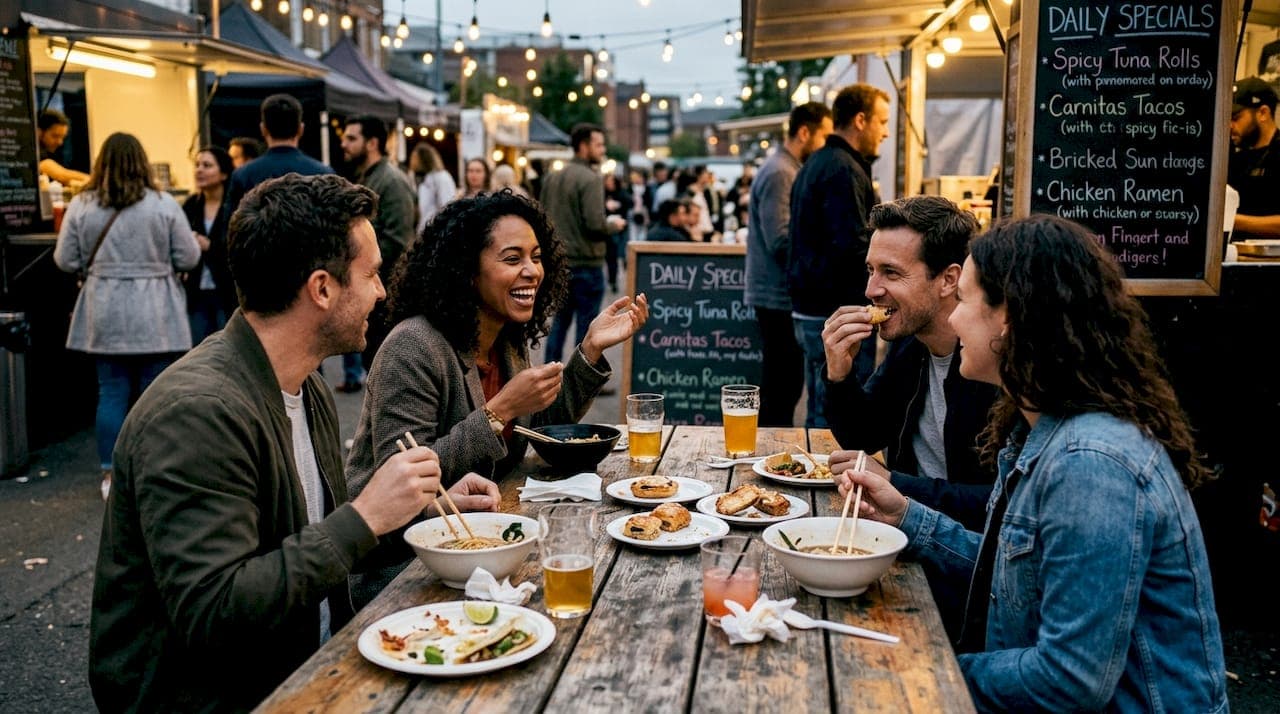
Scrolling through dozens of "best food city" lists can feel like standing in front of a buffet with no plate. Every publication has a different winner, a different method, and a different definition of what makes a city worth eating in. CEOWORLD magazine ranks London, New York, Paris, and Tokyo at the top for food in 2026 using data-driven analysis, but that is just one lens. The real value of city food lists is knowing how to read them, compare them, and use them to plan meals you will actually remember.
Table of Contents
- Ranking criteria for best city food lists
- London: Taking the top spot for 2026
- Tokyo: Michelin mastery and street eats
- Paris and New York: Old favorites, new twists
- US standouts: Miami, Portland, San Francisco
- Expert tips: Navigating city food lists and hidden gems
- Find your next dining adventure with Luveats
- Frequently asked questions
Key Takeaways
| Point | Details |
|---|---|
| Ranking factors matter | The best city food lists use multiple criteria like diversity, affordability, and accessibility. |
| London and Tokyo lead | London tops global lists for inclusivity, while Tokyo excels in Michelin dining and street food. |
| US rankings prioritize value | Miami, Portland, and San Francisco outrank NYC due to affordability and culinary variety. |
| Expert tips boost discoveries | Using diverse lists and local insights helps you avoid tourist traps and find authentic flavors. |
| Luveats supports all diners | Luveats city guides help you discover both iconic restaurants and hidden gems in any city. |
Ranking criteria for best city food lists
Before you trust any list, you need to understand how it was built. Not all rankings are created equal, and the criteria behind them shape the results dramatically.
CEOWORLD magazine ranks cities by restaurant density, Michelin stars, cuisine variety, street food quality, and accessibility. That last factor matters more than most people realize. A city with 50 Michelin-starred restaurants but zero wheelchair-friendly venues or vegan options will score lower than a city with fewer stars but broader inclusivity.
WalletHub uses affordability, diversity, accessibility, and quality for its US city rankings. Their model weighs the cost of a meal, grocery prices, restaurants per capita, and the presence of food festivals. This is why their results often surprise people. A city like Miami can outscore New York simply because your dollar stretches further there.
Here are the core metrics most credible food city lists use:
- Restaurant density: How many dining options exist per square mile or per capita
- Michelin stars: A proxy for fine dining excellence and culinary innovation
- Cuisine diversity: The range of global food traditions represented
- Street food quality: Accessibility of great food at low price points
- Vegan and dietary inclusivity: Options for plant-based and allergy-conscious diners
- Wheelchair and mobility accessibility: Physical access to venues
- Affordability: Average meal costs relative to local income
London scored a perfect 100 in the CEOWORLD index, while Miami leads the WalletHub US list with a score of 73.58. Two different lists, two different winners, both valid depending on what you are looking for. If you want to explore London vegan dining or check out the Sydney restaurant guide, the criteria above will help you evaluate what each city actually offers.
London: Taking the top spot for 2026
London did not land at number one by accident. It earned that perfect score through sheer variety, a commitment to inclusivity, and a dining scene that genuinely has no ceiling.
London is ranked number one by CEOWORLD magazine for its diverse cuisine, Michelin stars, and accessibility. The city hosts everything from Bangladeshi curry houses in Brick Lane to three-Michelin-star tasting menus in Mayfair. That range is rare. Most cities excel in one category but fall short in another.
What makes London stand out for food lovers:
- Global cuisine under one roof: Over 70 national cuisines are represented across the city
- Vibrant street food markets: Borough Market, Maltby Street, and Kerb events draw locals and visitors alike
- Vegan innovation: London consistently ranks among the top cities globally for plant-based dining options
- Accessibility: Many venues have invested in mobility-friendly infrastructure, boosting inclusivity scores
"London offers something for every palate and accessibility need, making it the most complete food city in the world right now."
Pro Tip: If you are visiting London, skip the tourist-heavy spots near major landmarks and head to neighborhoods like Peckham or Dalston for some of the most exciting and affordable food in the city. You can browse curated London vegan dining picks or check out NYC hidden gems for a similar approach in a different city.
Tokyo: Michelin mastery and street eats
If London wins on breadth, Tokyo wins on depth. No city on earth combines elite fine dining with everyday street food as seamlessly as Tokyo does.
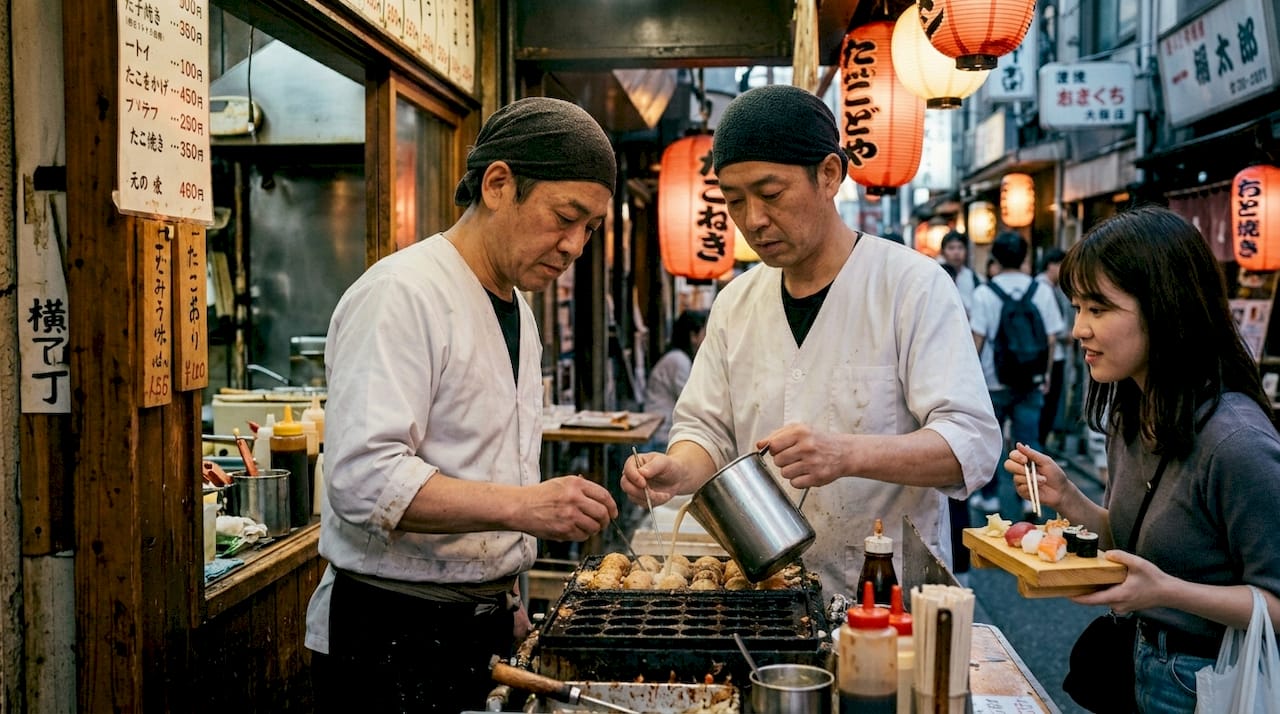
Tokyo ranked number one globally in a SIXT study for 2026 and holds 160 Michelin-starred restaurants, more than any other city in the world. That number alone is staggering. Paris, often considered the home of fine dining, has fewer starred restaurants than Tokyo.
But Tokyo is not just about luxury. The city's street food districts, from Asakusa to Shibuya, offer some of the most satisfying and affordable meals you will find anywhere. Ramen shops, yakitori stalls, and conveyor belt sushi bars sit comfortably alongside omakase counters charging hundreds of dollars per seat.
Key highlights of Tokyo's food scene:
- 160 Michelin-starred restaurants: The highest concentration of starred venues globally
- Street food culture: Deeply embedded in daily life, not just a tourist attraction
- Seasonal menus: Many restaurants change their offerings based on what is fresh, creating a dynamic dining calendar
- Value at every level: You can eat extraordinarily well for under $10 or spend $300 on a single meal
"Tokyo is the only city where a $8 bowl of ramen and a $400 omakase dinner can both be the best meal of your life."
Pro Tip: Do not miss Tsukiji Outer Market for a morning of diverse eats. Fresh seafood, tamagoyaki (Japanese egg omelet), and street snacks make it one of the best food walks in the world. Explore Tokyo insider picks to plan your route before you arrive.
Paris and New York: Old favorites, new twists
Paris and New York are the cities most people picture when they think of great food. Both deserve their reputations. But in data-driven rankings, they often fall short of the top spot for specific, measurable reasons.
Paris and New York consistently rank high but lose points for affordability and accessibility in WalletHub and CEOWORLD analyses. Paris scores brilliantly for culinary tradition and Michelin presence but can feel exclusionary to diners with dietary restrictions or mobility challenges. New York's diversity is genuinely unmatched, but the cost of eating well there is among the highest in the world.
| Category | Paris | New York |
|---|---|---|
| Michelin-starred restaurants | 120+ | 70+ |
| Cuisine diversity | High | Very high |
| Street food quality | Moderate | High |
| Affordability | Low | Very low |
| Vegan options | Growing | Excellent |
| Accessibility | Moderate | Moderate |
Both cities reward the adventurous diner who knows where to look. In New York, the best meals are often not in Manhattan at all. Queens and Brooklyn offer extraordinary food at a fraction of the price. Check out NYC hidden gems or browse top NYC eats for a fuller picture. For a different kind of American food city, Chicago restaurant picks offer deep-dish history alongside a genuinely modern dining scene.
US standouts: Miami, Portland, San Francisco
When you shift from global rankings to US-focused lists, the winners change fast. Cities that dominate international lists often drop significantly when affordability and local food culture enter the equation.
Miami, Portland, and San Francisco rank highest among US cities for variety, affordability, and festival presence. Miami scored 73.58 on the WalletHub index, while New York City came in at just number 26. That gap is not a fluke. It reflects real differences in meal costs, restaurant density per capita, and the richness of local food events.
| City | WalletHub score | Key strength |
|---|---|---|
| Miami | 73.58 | Diversity and affordability |
| Portland | Top 5 | Local food culture and festivals |
| San Francisco | Top 5 | Cuisine innovation and variety |
| New York City | #26 | Diversity (penalized for cost) |
What gives these cities their edge:
- Miami: A fusion of Latin American, Caribbean, and American cuisines at accessible price points
- Portland: A food truck and local restaurant culture that punches well above its city size
- San Francisco: Farm-to-table innovation and one of the most diverse food scenes in the US
Explore the Portland food scene for a city that consistently surprises first-time visitors. If budget is a priority, LA cheap eats and Atlanta best eats are also worth your time.
Expert tips: Navigating city food lists and hidden gems
Knowing which cities rank highly is useful. Knowing how to use that information is what separates a good trip from a great one.
Experts advise prioritizing lists with diversity, including street food and vegan options, and using comparison benchmarks for robust decisions. No single list tells the whole story. A ranking that ignores affordability will steer budget-conscious travelers wrong. A ranking that ignores accessibility will fail diners with mobility needs.
Personal bias in food rankings is a real issue, and the smartest approach is to consult multiple sources before committing to a destination or a restaurant.
Here is a practical framework for using city food lists effectively:
- Check the methodology first: Does the list explain how it scores cities? If not, treat it as opinion, not analysis.
- Match criteria to your priorities: If affordability matters, use WalletHub. If fine dining is your goal, lean on Michelin and CEOWORLD.
- Look for local food festival calendars: Cities with active food event scenes offer more spontaneous discovery opportunities.
- Cross-reference at least two lists: A city that appears in the top 10 of multiple independent rankings is a safer bet.
- Seek out neighborhood-level guides: City-wide rankings miss the best blocks. Drill down to specific areas for the most useful recommendations.
Pro Tip: When visiting a new city, find one local food market and spend a morning there before booking any restaurants. Markets reveal what a city actually eats, not just what it serves to tourists. For coastal California dining, Santa Monica best eats is a great starting point.
Find your next dining adventure with Luveats
You now have a solid framework for reading city food lists, understanding what drives rankings, and identifying the cities that match your dining style. The next step is putting that knowledge to work.
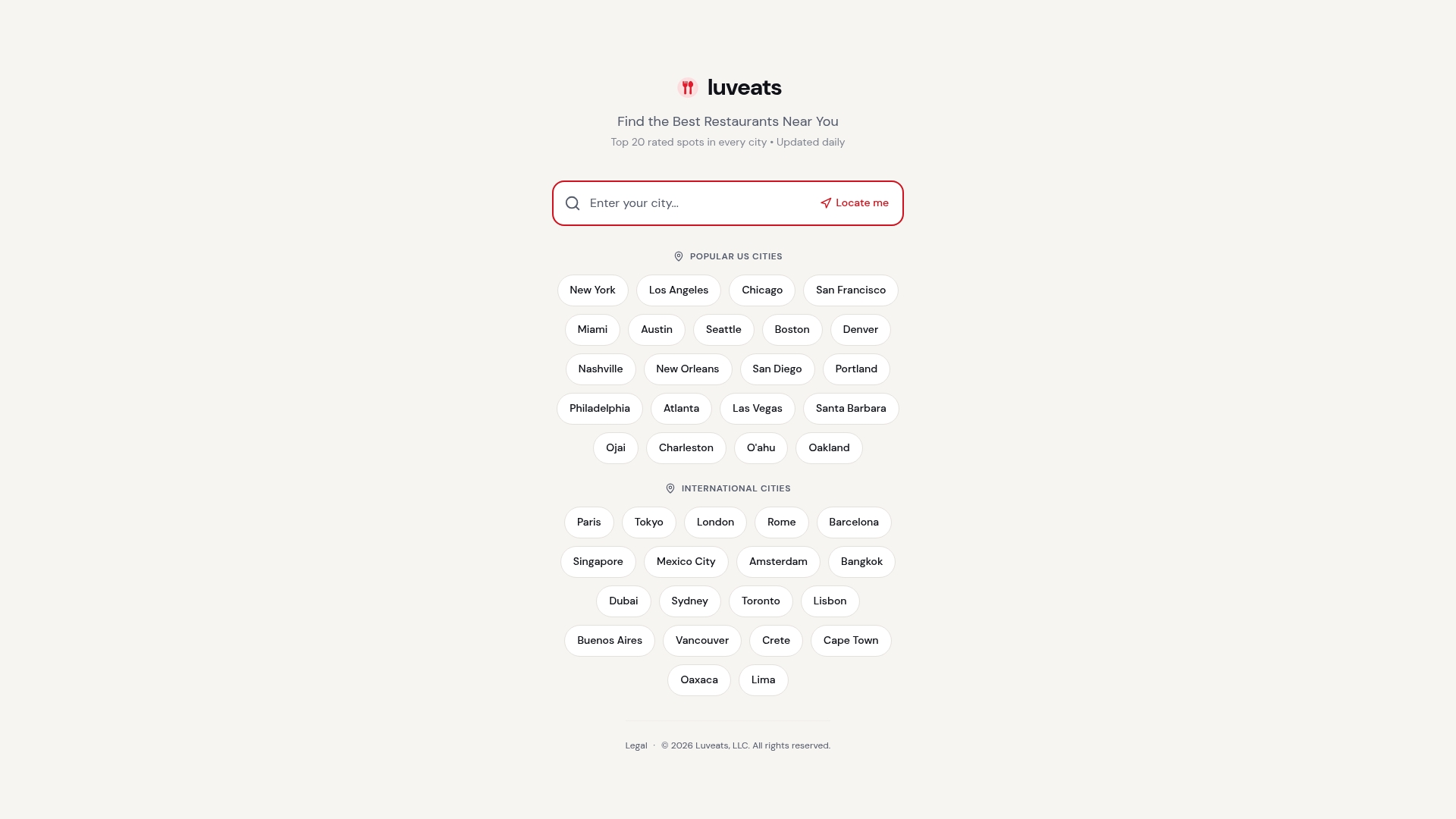
Luveats updates its curated top 20 restaurant lists daily for cities across the US and internationally, so you are always working with current ratings and real reviews. Whether you are planning a trip to Chicago best restaurants, hunting for NYC hidden gems, or exploring SF curated picks, Luveats gives you the shortlist without the noise. Browse by city, filter by cuisine, and find your next great meal in minutes.
Frequently asked questions
How are cities selected for best city food lists?
Major lists use factors like restaurant density, cuisine diversity, Michelin stars, street food quality, and accessibility for all diners. The weight given to each factor varies by publication, which is why results differ across lists.
Why do US-focused lists often rate Miami and Portland higher than NYC?
US rankings prioritize affordability and variety, and Miami, Portland, and San Francisco score higher than NYC because meal costs in New York significantly drag down its overall ranking despite its diversity.
What makes Tokyo stand out in global food lists?
Tokyo holds 160 Michelin-starred restaurants, more than any other city in the world, and is equally celebrated for its accessible and high-quality street food culture.
How can I make the most of city food lists as a traveler?
Compare multiple ranking sources and look for lists that factor in diversity, local food festivals, and neighborhood-level recommendations to find hidden gems outside the usual tourist zones. Consulting varied food ranking criteria helps you avoid the personal bias that affects many single-source lists.